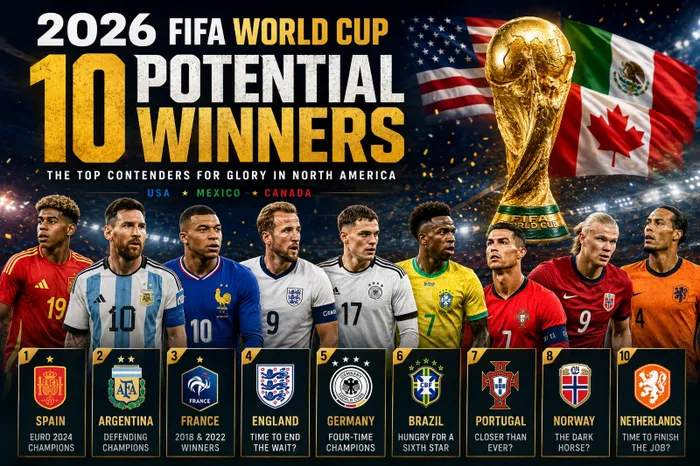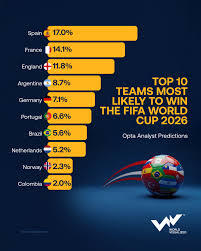
The FIFA World Cup 2026 is set to be the most competitive edition ever, with 48 teams entering the tournament. While the expanded format opens doors for new contenders, traditional powerhouses remain strong favourites. With a mix of proven champions and rising forces, several teams stand out as serious contenders to dominate the global stage.
Introduction: A Wider Field, Stronger Competition
The FIFA World Cup 2026 will not only be bigger in size but also deeper in competition. With more teams and a longer format, consistency and squad depth will play a crucial role.
Football powerhouses will aim to maintain dominance, while emerging nations will look to disrupt the hierarchy. Recent performances in continental tournaments, squad strength, and player form make certain teams clear ones to watch.
-
Argentina – Defending Champions
Argentina enters the tournament as the reigning world champion after winning the 2022 edition.
- Strong squad depth with experienced and young players
- Consistent performance in international tournaments
- Tactical stability under established coaching
Argentina’s ability to perform in high-pressure matches makes them a top contender again.
-
France – Consistent Finalists
France has reached multiple World Cup finals in recent years.
- Deep talent pool across all positions
- Strong attacking and defensive balance
- Proven track record in knockout stages
Their consistency makes them one of the most reliable teams in global football.

-
Brazil – The Eternal Favourite
Brazil remains one of the most decorated teams in World Cup history.
- Five-time World Cup winners
- Strong attacking tradition
- High technical skill level
Brazil’s flair and experience always place them among the top contenders.
-
England – A Rising Force
England has shown steady improvement in recent tournaments.
- Strong youth development system
- Balanced squad with depth
- Regular appearances in semi-finals
Their recent performances indicate growing maturity on the global stage.
-
Spain – Tactical Excellence
Spain continues to rely on its possession-based style.
- Technically skilled midfielders
- Strong team coordination
- Emphasis on structured gameplay
Spain’s ability to control matches makes them a serious threat.
-
Germany – Rebuilding with Purpose
Germany is undergoing a transition phase but remains dangerous.
- Strong footballing infrastructure
- Focus on rebuilding squad depth
- Experience in major tournaments
Germany’s history of comebacks keeps them in contention.
-
Portugal – Balanced and Experienced
Portugal combines experience with emerging talent.
- Strong attacking options
- Tactical flexibility
- Consistent performance in European competitions
Their balanced squad gives them an edge in tight matches.
-
Netherlands – Tactical Discipline
The Netherlands continues to impress with structured gameplay.
- Solid defensive organisation
- Effective counter-attacking strategy
- Strong team cohesion
They remain a difficult team to break down in knockout matches.
-
Belgium – Golden Generation’s Final Push
Belgium’s experienced core may get one last opportunity.
- Skilled midfield and attacking players
- Strong international experience
- Tactical adaptability
Despite recent inconsistencies, Belgium still poses a threat.
-
United States – Home Advantage
The United States will benefit from hosting most matches.
- Familiar conditions and fan support
- Growing football infrastructure
- Young and energetic squad
Home advantage often plays a crucial role in World Cup success.
Key Trends to Watch in 2026
- Increased competition due to 48-team format
- Greater importance of squad rotation
- Emerging teams challenging traditional powers
- Tactical adaptability becoming critical
Frequently Asked Questions
- Which team is the favourite for FIFA World Cup 2026?
Argentina and France are considered strong contenders due to their recent performances. Brazil and England also remain top favourites based on squad strength and consistency.
- Will new teams challenge traditional powers?
The expanded format allows more teams to participate, increasing the chances of surprises. Emerging football nations may challenge established teams in group and knockout stages.
- How important is squad depth in 2026?
Squad depth is crucial due to the increased number of matches. Teams with strong bench strength will have an advantage in maintaining performance levels throughout the tournament.
- Does hosting give an advantage?
Yes, host nations often benefit from familiar conditions and strong fan support. The United States may gain an advantage due to playing most matches at home.
- Can underdog teams win the tournament?
While traditional powers dominate historically, the new format increases unpredictability. Strong performances in knockout stages can lead to unexpected outcomes.
Conclusion
The FIFA World Cup 2026 will feature a diverse mix of established giants and rising challengers. Teams like Argentina, France, and Brazil remain favourites, while nations such as the United States and Netherlands add unpredictability. With more matches and greater competition, the tournament promises a dynamic and highly competitive global event.