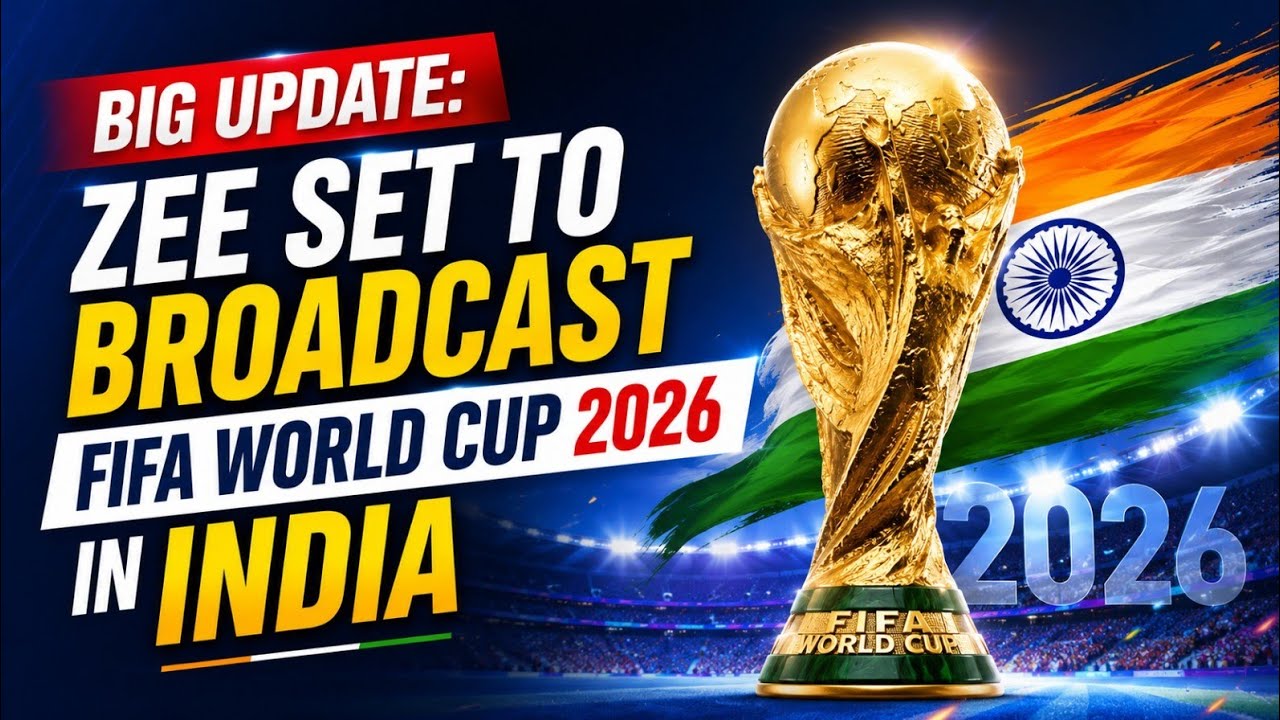
Millions of football fans in India and China are facing uncertainty over whether they will be able to watch the FIFA World Cup 2026 on television. Reports suggest that broadcasters in both countries have still not finalized media rights agreements with FIFA, even though the tournament is only weeks away. This situation is unusual for an event of such global scale because broadcasting deals are generally completed months or even years before the competition begins. The delay has created confusion among football fans and raised questions about the rising cost of sports broadcasting rights worldwide.
Why the Broadcast Deals are Still Pending
According to reports, negotiations between FIFA and broadcasters in India and China are still ongoing. FIFA has confirmed that discussions remain confidential, but local media in both countries indicate that pricing disagreements are the major obstacle. Broadcasting rights for international sporting events have become increasingly expensive over the years, especially for tournaments with massive global audiences like the World Cup. As a result, broadcasters are carefully evaluating whether the investment can generate enough advertising and subscription revenue.
Key Highlights:
- FIFA and broadcasters are still negotiating rights
- Pricing disagreements are reportedly the main issue
- Talks remain confidential according to FIFA
- Most global deals are usually finalized much earlier
China Faces High Broadcasting Costs
Reports from Chinese media suggest that FIFA initially demanded nearly $300 million for the broadcasting rights from China Central Television. Although FIFA reportedly reduced the asking price to between $120 million and $150 million, the amount is still said to be more than double the broadcaster’s planned budget. Analysts believe that lower public interest may also be affecting negotiations because China’s national team failed to qualify for the tournament. Time zone differences between North America and China could further reduce live television audiences since many matches may air late at night or early morning for Chinese viewers.
Key Highlights:
- FIFA reportedly reduced its asking price
- CCTV’s budget remains significantly lower
- China did not qualify for the World Cup
- Time difference may impact viewership numbers
Indian Fans Also Await Confirmation
In India, football fans are also waiting for official confirmation regarding tournament broadcasting. Although local media reports suggest that a deal could be announced soon, there is still no official agreement in place. India has witnessed rapid growth in football viewership over the past decade, especially during major tournaments such as the FIFA World Cup and European championships. The uncertainty has therefore become a major talking point among sports fans across the country.
Key Highlights:
- No official broadcasting deal confirmed yet in India
- Local reports suggest negotiations are progressing
- Football popularity has grown significantly in India
- Fans remain uncertain about viewing access
Why This Situation is Unusual for FIFA
Normally, FIFA completes broadcasting agreements far in advance because television rights are a major source of revenue for the organization. For example, FIFA finalized its deal with CCTV for the 2018 and 2022 World Cups back in 2017. The current delay highlights changing economic realities in global sports media, where broadcasters are becoming more cautious about spending huge amounts on rights deals. The issue also reflects growing competition from streaming platforms and digital media services.
Key Highlights:
- Previous World Cup deals were finalized years earlier
- Broadcasting rights are a major FIFA revenue source
- Media companies are becoming more cautious financially
- Streaming platforms are changing sports broadcasting trends
What it Means for Football Fans
If agreements are delayed further, fans in India and China could face limited access to one of the world’s biggest sporting events. Many viewers may have to rely on streaming services, international feeds, or alternative viewing methods if official broadcasters are not confirmed in time. Experts believe that FIFA and broadcasters will eventually reach an agreement because of the tournament’s massive commercial value. However, until official announcements are made, uncertainty continues to dominate discussions among football supporters.
Key Highlights:
- Fans could face difficulties accessing live matches
- Streaming platforms may become alternative options
- FIFA is expected to eventually finalize agreements
- Concerns continue as the tournament approaches
Frequently Asked Questions
Q1. Why are World Cup broadcast deals delayed in India and China?
Reports suggest that disagreements over broadcasting costs are delaying negotiations between FIFA and broadcasters.
Q2. Has FIFA confirmed ongoing negotiations?
Yes, FIFA said discussions in both countries are ongoing and confidential.
Q3. Why is China less interested in the 2026 World Cup?
Chinese media reports indicate that interest may be lower because China failed to qualify for the tournament.
Q4. Will Indian fans still be able to watch the FIFA World Cup 2026?
Local reports suggest a deal could still be announced soon, but no official confirmation has been made yet.
Q5. Why are broadcasting rights so expensive?
Major sporting events attract huge global audiences, making television and streaming rights extremely valuable commercially.
SEO Section
Focus Keywords:
- FIFA World Cup 2026 broadcast rights
- India World Cup telecast
- China FIFA World Cup 2026 coverage
- FIFA TV rights dispute
- World Cup 2026 broadcasters
Meta Title:
India and China Face FIFA World Cup 2026 Broadcast Uncertainty
Slug:
fifa-world-cup-2026-broadcast-rights-india-china
Conclusion
The uncertainty surrounding FIFA World Cup 2026 broadcasting rights in India and China has become a major concern for millions of football fans. With the tournament approaching rapidly, the absence of finalized agreements highlights the growing financial pressures within global sports media. While experts expect negotiations to conclude successfully, fans in both countries continue to wait for official confirmation about how they will watch the biggest football event in the world.